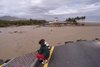
Cyclone Gonu
[ 28 ]
| Cyclone Gonu hit the northeast of Oman during 6 and 7 of June 2007. With torrential rains and cyclonic wind gusts, it left destruction in its wake. The death toll is still uncertain, but it is estimated that between 20 and 40 lifes were lost. These are some photos taken in Muscat during the aftermath of the cyclone.
|
|
|
|
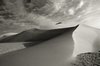
Deserts-Empty Quarter
[ 17 ]
| The Empty Quarter is a vast nothingness of rolling sand dunes, the true essence of Arabia. To make us feel appropriately insignificant. Thesiger is the name that always comes up, associated with the Empty Quarter, qhich he crossed twice in the 1940's. His romantic and inspiring visions of this desert and the bedouins are true classics. |
|
|
Deserts-Huqf
[ 11 ]
| A vastness of sand and bare rock, where silence rules. |
|
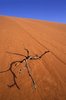
Deserts-Wahiba Sands
[ 23 ]
| A small desert, but very complete for a true experience. It is also home to the Bedouin tribes, always friendly and welcoming. |
|
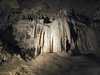
Hoota Cave
[ 8 ]
| One interesting cave to visit, near Nizwa and Tanuf. |
|
|
|

Jalaan Bani Bu Hassan and Bani Bu Ali areas
[ 23 ]
| In this region, it is possible to find some of the most well preserved traditional omani architecture, with obvious traces of Yemen influence. |
|
|
|
|
Mountains - Eastern Hajar
[ 12 ]
| The Eastern Hajar mountains are bordered by the Gulf of Oman, to the North, and by the Wahiba Sands desert, to the South. This makes for some stark contrasts, as the mountains have some beautiful and fresh wadis (such as Wadi Bani Khalid), from where it is possible to glimpse the beginning of the sand dunes. |
|
Mountains - Wadi Jizzi
[ 6 ]
| Wadi Jizzi is located near the border of Oman with the UAE. Since pre-historic times, it has been an area where metals (especially copper) have been mined and exploited. These resources are related to the presence of of a varied geology, with many volcanic and exotic rock assemblages. |
|
Mountains-Jebel Akhdar
[ 70 ]
| Al Jebel Al Akhdar, or the "green mountain", is part of the Al Hajar mountain chain, the backbone of Arabia. At 2000 metres of altitude, among dispersed immemorial villages and green plantation terraces, one wonders how life clings to the bare rocks. The heart of these mountains is cut by narrow and deeply incised canyons, or wadis, that can be either peaceful, or raging with torrents of water.
|
|
Mountains-Jebel Shams
[ 38 ]
| Jebel Shams is also known as the ?mountain of the Sun?, so-called due to hosting the higher mountain peak in Oman, at 3000 metres altitude. Here, winter is really cold and harsh, and the mountains are made up of bare rocks and jaggy cliffs. It also harbours wadi Nakhr, the Grand Canyon of Oman, well known by its 1000 metres precipitous drop. Not for the faint hearted.
|
|
Mountains-Sayq Plateau
[ 23 ]
| This plateau in the heart of the Jebel Akhdar mountains is famous for its scattered villages and unique climate. |
|
Mountains-Wadi Mistal and Wakan
[ 25 ]
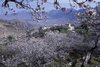
| This area of the Jebel Akhdar is characterized by its scattered little villages, and its green terraces full of fruit trees. |
|
|
|
|
|
|
Muscat - Mutrah Fish Market
[ 13 ]
| The Mutrah fish market is one of the highlights in Muscat, and old traditions are still in place.
|
|
|
|
|
|

Nizwa
[ 24 ]
| This ancient city and formal capital of Oman is one of the principal gateways into the Jebel Akhdar mountains. |
|
Panoramas
[ 28 ]
| This portfolio contains panoramic photographs obtained with a digital compact camera. |
|